Black Nonprofits Didn’t See Lasting Funding Gains After 2020
Black Nonprofits Didn’t See Lasting Funding After 2020 Racial Reckoning
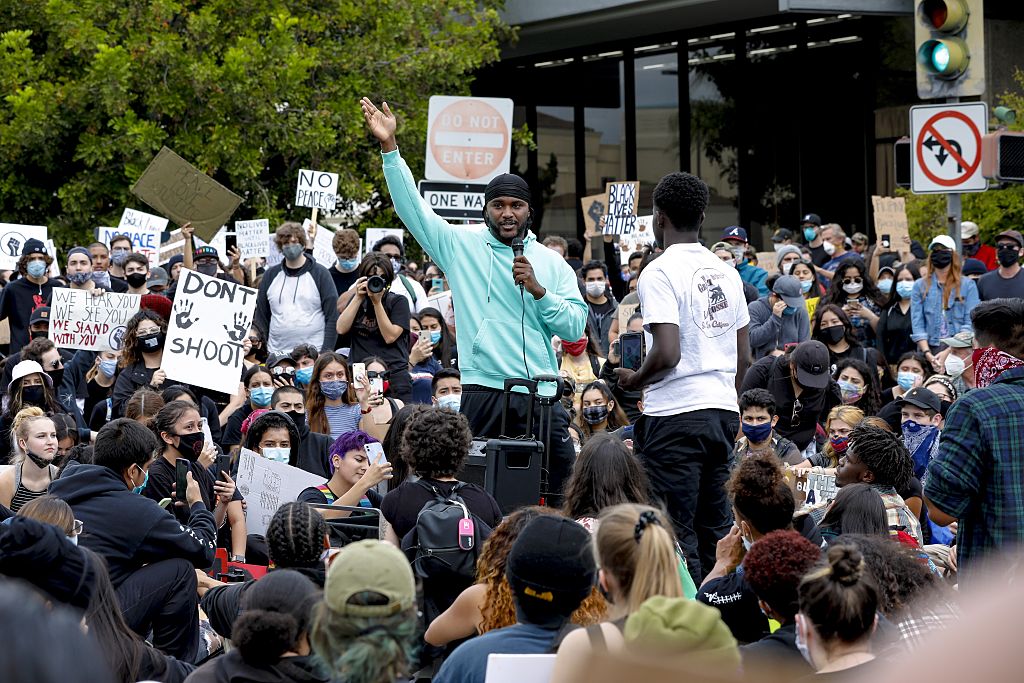
After the deaths of Breonna Taylor, Ahmaud Arbery, and George Floyd in 2020, there was a nationwide “racial reckoning.” There were protests, social media campaigns, and pledges from several companies to invest in Black businesses and nonprofits in a show of solidarity. Apparently, all that “solidarity” was a performance, as Black-led nonprofits haven’t received any long-term financial support since.
According to AP, research conducted by the nonprofit research service Candid and the Black philanthropy group ABFE found that most of the money donated to larger Black-led nonprofits was raised between 2020 and 2022. Smaller, local Black-led nonprofits saw no significant increase in funding through the short-lived surge. The research found that while 70% of white-led nonprofits received foundation grants, only half of Black-led nonprofits received similar grants, and usually for significantly less money.
“Despite their years of impact, many Black nonprofit leaders report struggling to form sustained partnerships with foundations,” Ann Mei Chang, CEO at Candid, said in the report. “There’s a misconception that Black-led nonprofits received a windfall of funding following the 2020 racial justice movement. Data like this enables us to demonstrate what is actually occurring in the funding landscape and spark a productive, sector-wide discourse on what Black-led nonprofits need from private foundations.”
Asiaha Butler, the CEO of the Resident Association of Greater Englewood, which was founded 15 years ago to help combat the negative narratives surrounding South Side Chicago, told AP that her organization received dozens of new backers in the summer of 2020. “All of a sudden, we were desirable for people to fund,” recalled Butler. She added that the “spurt” became a “curse” as it became clear the surge in funding would be short-lived.
“We started seeing this revenue and thinking we’re gaining really great relationships with funders,” Butler told AP. “And, really, those priorities shifted quickly.” Butler added that “Priorities have shifted” has become a common refrain she’s heard from those previous backers, as well as being told they have “new strategic goals.”
“Little buzz words that just say perhaps this nonprofit — grassroots, Black-led, very focused on the Black population — is probably just not in peoples’ cards to continue to support,” she said.
Instead of the foundations using the moment to build lasting relationships with Black-led nonprofits, the general feeling among the CEO’s interviewed is that the brief surge was simply transactional for the donors. T’Pring Westbrook, a nonresident fellow at the Urban Institute’s Center on Nonprofits and Philanthropy, cofounded a consulting group that works with small nonprofits. Westbrook has found that the issue isn’t necessarily that foundations don’t want to support marginalized communities, but that they only do so through “trend funding.”
“Maybe during Black History Month, there will be a funding campaign,” Westbrook told AP. “But the thing about a campaign is a campaign doesn’t build sustainability.”
It’d be one thing if these Black-led nonprofits simply had to return to the status quo they were operating in before the donation surge, but now they’re dealing with a government that is actively combative against their work. The Trump administration’s ongoing attacks on diversity, equity, and inclusion (DEI) initiatives have led to several companies and schools walking back their pledges to diversity.
Compounding the issue is that many of the moves made by the Trump administration are actively hurting the communities that rely on these Black-led nonprofits. The GOP’s allowing Affordable Care Act subsidies to expire dramatically increased health care costs, the war in Iran has increased food and gas prices, and it also doesn’t help that layoffs within the federal government have disproportionately affected Black women.
“We’re literally being asked to do more with less resources,” Black Voters Matter cofounder Cliff Albright told AP.
While the picture painted by the data isn’t great, Candid and ABFE’s report did outline several solutions that philanthropists and foundations could adopt to address the funding disparity. One of the key steps would be to move away from “trend funding” and actively build lasting relationships with Black-led nonprofits. While Black folks need to support our organizations when we can, it’s simply a struggle for Black-led nonprofits to be impactful without significant, long-term investment.
SEE ALSO:
Poll Finds Many Don’t Believe Black People Face Discrimination
From George Floyd to Jacques Beauregard: America’s Racist Rebound
Black Nonprofits Didn’t See Lasting Funding After 2020 Racial Reckoning was originally published on newsone.com